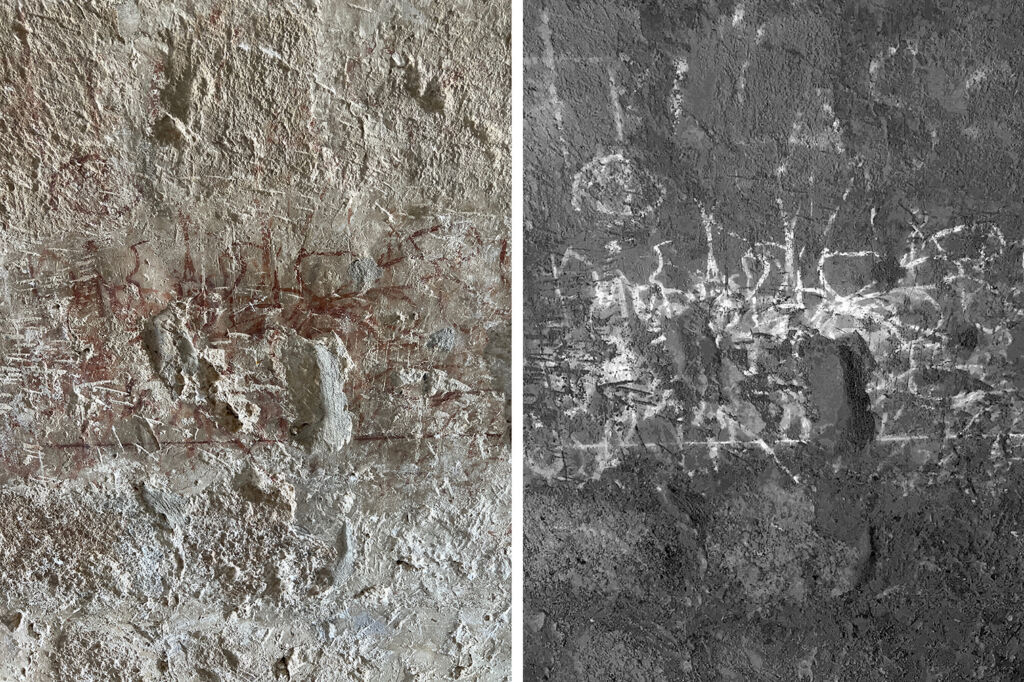
DStretch is a decorrelation stretch: an image processing technique, borrowed from remote sensing, that exaggerates small differences in color. Applied to an ordinary photograph, it can make faded paintings, graffiti and inscriptions readable that the eye barely registers on the wall itself. It is fast, it works on the photographs I already take, and it never touches the surface.
Faded detail
Brings back pigments, drawings and inscriptions that have weathered almost to invisibility.
Hidden features
Helps detect buried or covered traces non-invasively, from faint marks on plaster to traces in the soil.
Material differences
Separates materials and coatings by their color response, so repairs, layers and pigments become easier to tell apart.
How DStretch relates to my work
I use DStretch as a reading aid next to RTI and photogrammetry. RTI recovers relief by changing the light; DStretch recovers color contrast by changing the numbers, and the two answer different questions about the same surface. Because the result is a processed image and not a measurement, I always keep the original photograph beside it and report which color space was used.
It also works well for wall graffiti and wall paintings, where the traces are often pale, scratched and mixed with plaster and soot. DStretch is an ImageJ plugin and also exists as a smartphone app, so it can be tried in the field.
Case study: Kolossi Castle, Cyprus
Further reading
- DStretch website, download, instructions and examples by its developer, Jon Harman
- DStretch, Jerusalem Institute for Research and Digital Documentation of Cultural Heritage