Research and documentation of cultural heritage
Every record of a heritage site is an interpretation of it.
I document heritage sites in the field with museums, heritage authorities and European research partners, using photogrammetry, RTI, Gaussian splatting and immersive media. Then I ask what these computational images change in how we see and know the past.
About
I am a researcher of computational imaging and cultural heritage. My work asks how people, imaging technologies and places shape one another: what a wall of pilgrims’ marks can tell us about who stood there, and what happens to a site once it becomes an image we can walk through.
I follow these questions in publications and in fieldwork, from the Chapel of Saint Helena in Jerusalem to the Apostolos Andreas Monastery in Cyprus.
Associate Researcher, Cities and Territories
Research
Questions I work on

What historic urban surfaces remember
Graffiti and incised marks record who was present at a site and what they did there, often where no written source survives. I study them with historians and archaeologists as a visual medium tied to its setting.

What is it like to see a place from where no one ever stood?
A 3D model has no camera position. The viewer moves through a site from angles at which nobody ever stood. I have described the unease this produces as technological uncanniness, and I study what it means for how the public meets heritage in virtual tours and VR.

How new technologies affect the photographic experience
When software directs the capture, the photographer’s expertise has to move somewhere else. My research with professional photographers who use Structure from Motion traces that move, and it shapes how I teach documentation.
Projects
From the field
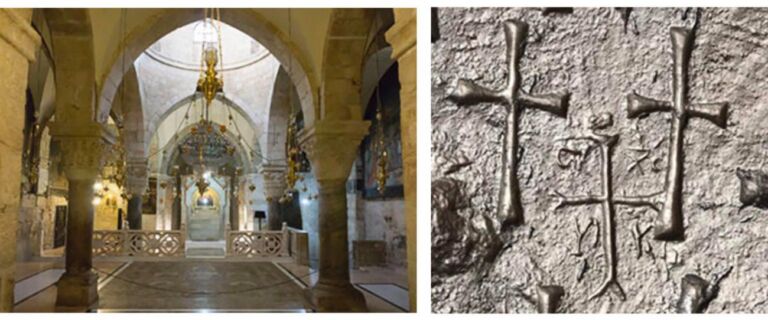
Thousands of crosses in the Chapel of Saint Helena were long credited to Crusader pilgrims. The research our imaging supported dates them at least three centuries later.
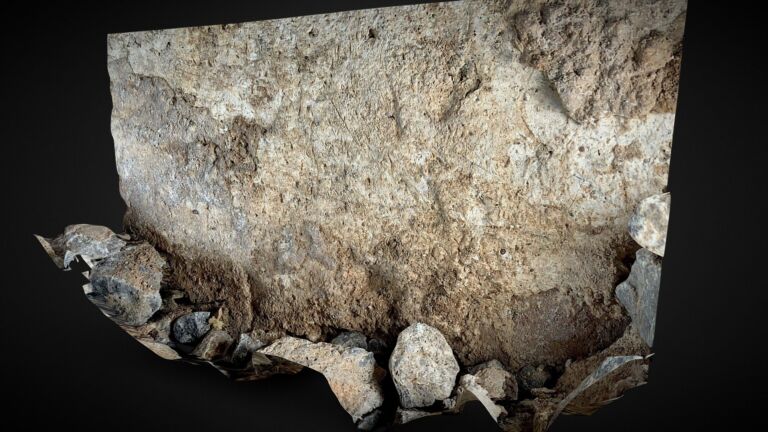
The first comprehensive digital record of the chapel’s interior surfaces, and of the names pilgrims left on them. Commissioned by UNDP Cyprus.
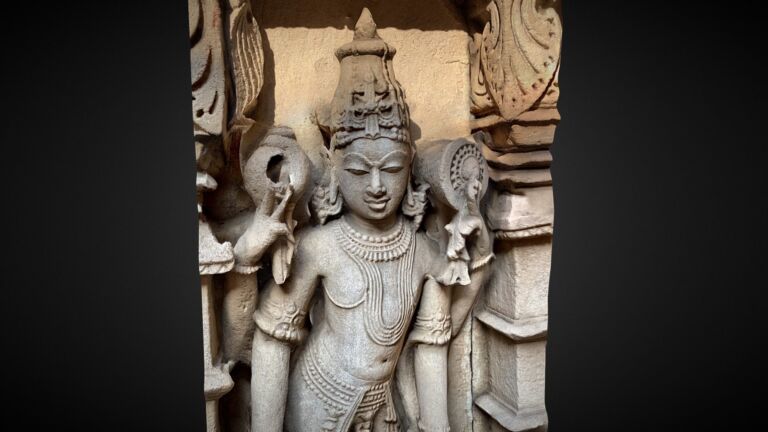
Stepwells of Gujarat and Rajasthan
LiDAR and photogrammetry models of stepwells and mosques, and the question of who owns such a record.
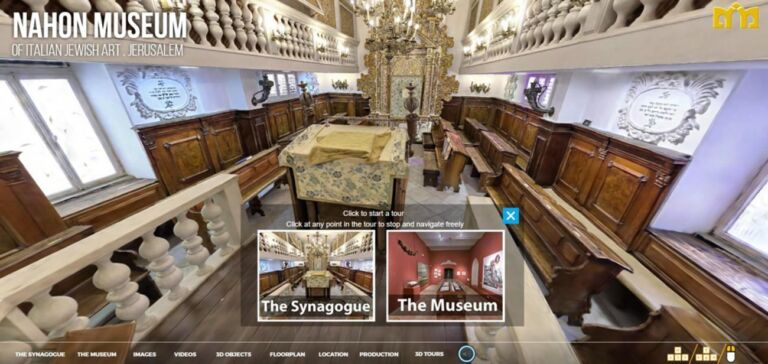
Conegliano Synagogue and Nahon Museum
An 18th-century synagogue was moved from the Veneto to Jerusalem. What does a relocated sacred space become when it is moved again, onto a screen?
Research output
Publications and activity
Publications
New Media & Society, 2026, with T. Morse
What becomes of witnessing when perpetrators record and distribute their own violence on decentralized platforms.
Digital Heritage, LNCS 16262, Springer, 2026, with M. Caine and S. Tager
How fine surface detail and texture can be captured and shown in 3D heritage objects without risk to fragile originals.
The uncanniness of interactive photography
Philosophy of Photography, 2024
Why 3D photogrammetric models feel strange: the viewer can no longer tell where the camera stood.
photographies, 2023
How automation moves the photographer’s expertise from making the image to distributing it.
Talks and conferences
Workshops and teaching
October 2026 to January 2027
Convenor of an online heritage imaging course with ten speakers
July 2024
Documenting the Lampadistis Monastery
Field documentation with students at STARC, The Cyprus Institute
Collaboration
Working together

Research partnerships
I join consortia and research projects as the partner responsible for visual documentation and its interpretation: what to record, at what scale, and what the record can support as evidence.

Documentation campaigns
Fieldwork built around a research or conservation question, carried out with archaeologists, historians and conservators, and published.

Teaching and lectures
Courses and masterclasses for heritage teams and students, and lectures on computational images and heritage. In 2026 I convene DIPTCH, an online heritage imaging course with ten speakers.
I welcome inquiries from museums, heritage authorities, universities, and research consortia about documentation projects, joint research, and training. I would be glad to learn about your work and to explore how we might collaborate.