Project Description
The New Jerusalem asks to build a conceptual bridge between Jerusalem (as a temporal-historical island) and London City Island (the physical location of the Arebyte Gallery). By performing a ‘reversed pilgrimage,’ Doron seeks to critically examine the historical, political, and cultural connection between Jerusalem and London.
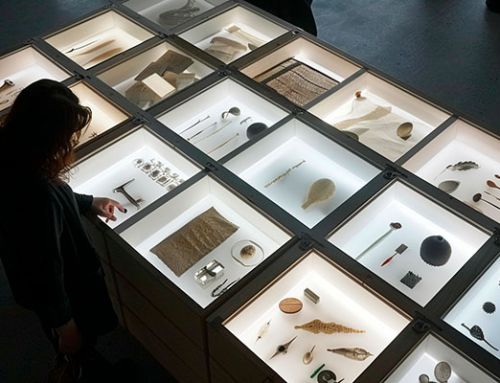
Doron brought to London, as a symbolic and performative act, virtual travel souvenirs as cultural ‘artifacts.’ For Doron, the spatial relocation from Jerusalem to the London gallery mirrors the Crusades’ tenth- and eleventh-century invasion. Doron is a (time) traveler who, in response to the Crusaders’ pilgrimage, undertakes a personal journey into London’s gallery.
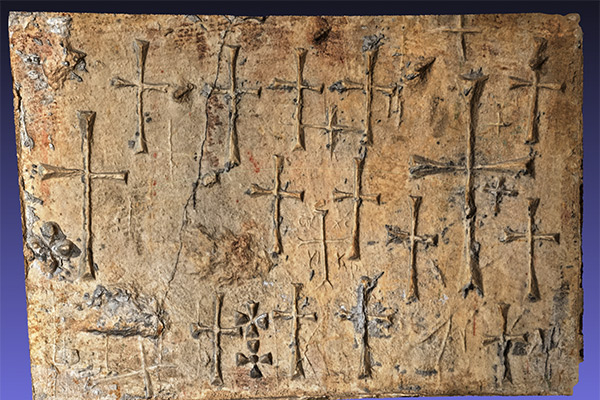
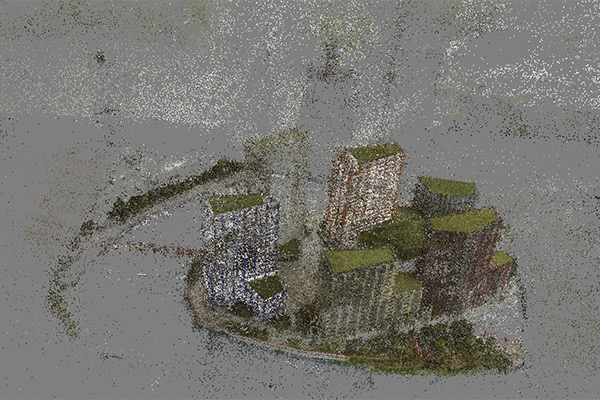
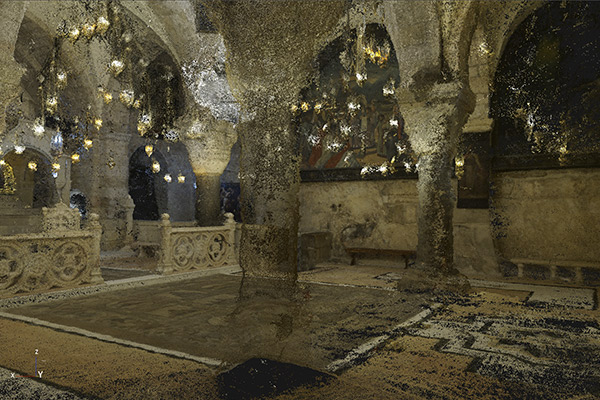
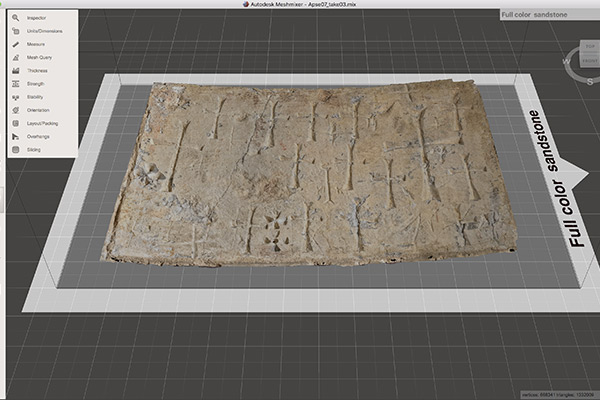
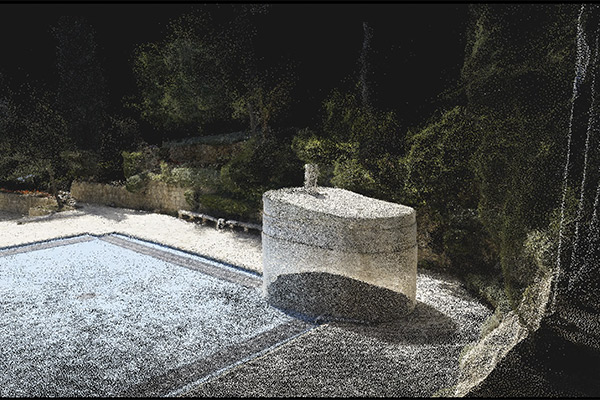
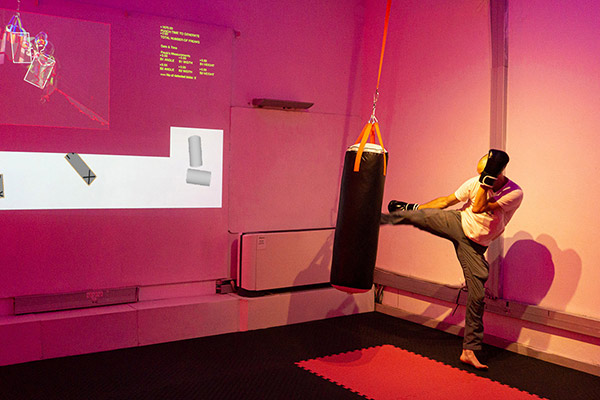
Using photogrammetry, sound, projection mapping, and 3D printing, Doron aimed to recreate his alternate version of Jerusalem in London. Some of the relocated artifacts come from the hundreds of crosses engraved on the walls of the St. Helena Chapel (part of the Church of the Holy Sepulcher). Pilgrims are believed to have engraved these crosses upon arriving in Jerusalem during the Crusades. Using photogrammetry and 3D printing of the St. Helena Chapel walls, Doron replicates objects that represent evidence of, and the presence of, European crusaders in Jerusalem. By virtually bringing the visual traces of pilgrimage to London, Doron wishes to reverse history.
The project explores the idea of the replica, as well as documentation, truth, and accuracy, versus invention. It raises socio-political issues about who owns cultural heritage and how colonialism shapes social identity.
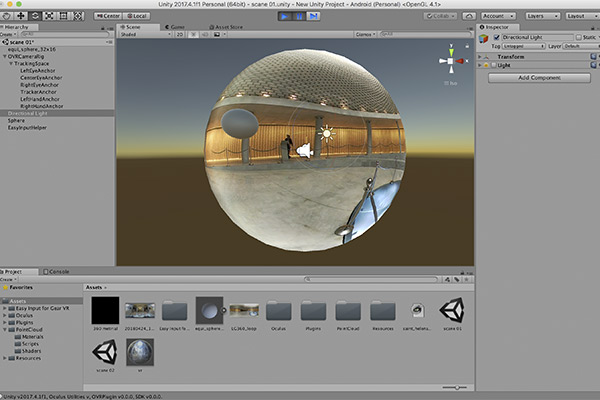
3D printing, projector, custom VR software