Selected photogrammetric models of heritage sites, monuments and objects. Many of them can be explored interactively in 3D on my Sketchfab page. Click any model to explore it in 3D, without leaving this page.
Gaussian splats: photogrammetry’s visual companion
A photogrammetric mesh is built for measurement. It gives me geometry I can scale, section and compare, but it flattens reflective surfaces, fine edges and anything translucent. Gaussian splatting starts from the same photographs and the same camera alignment, and replaces the mesh with millions of small, view-dependent colored blobs. The result is not a measurable surface; it is a remarkably faithful visual record of how a place looked.
In my workflow the two are complementary. I align the images in 3DF Zephyr, export the cameras in COLMAP format, and train the splat in Postshot, so the mesh and the splat share one coordinate frame. The mesh carries the metric evidence; the splat carries the atmosphere. For some sites I also shoot 360 video (Insta360) and process it with Splatica.
Sketchfab cannot display splats yet, so I host them on other viewers.
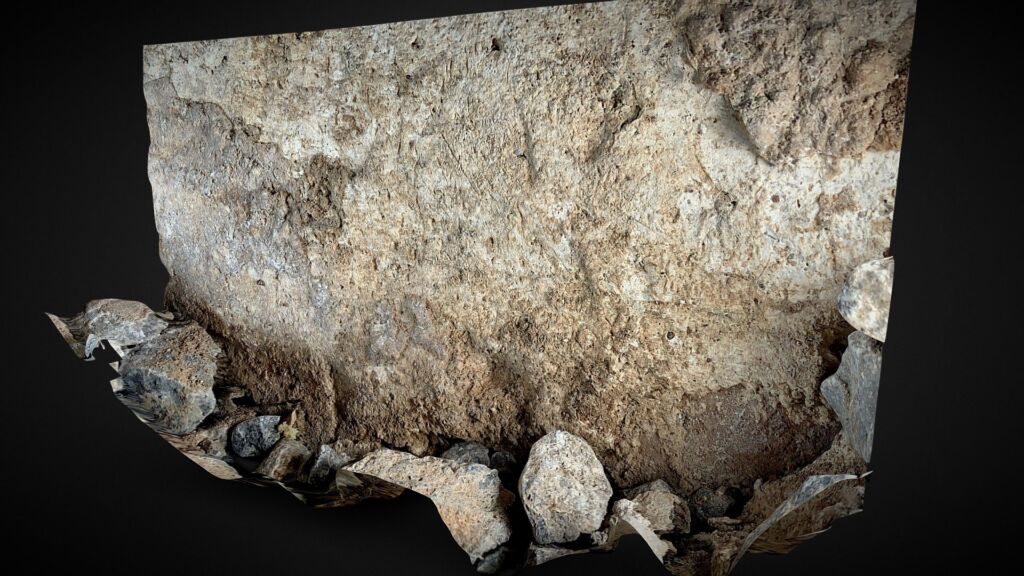
How photogrammetry relates to my work
Photogrammetry, and in particular structure from motion, reconstructs a measurable 3D model from many overlapping photographs. It is non-destructive, portable and scalable from a single object to a whole building, which has made it one of the central tools of contemporary heritage recording. I use it to create computational surrogates of sites and objects that can be measured, archived, analyzed and shared with the public.
My research combines photogrammetry with other imaging methods. At the Chapel of Saint Helena in the Church of the Holy Sepulchre, we combined structure from motion with Reflectance Transformation Imaging (RTI) to read the crosses incised on its walls, work that contributed to re-dating them. I have also written about how the absent camera viewpoint of photogrammetric models changes the way we perceive space.
Further reading
- Photogrammetric Applications for Cultural Heritage: Guidance for Good Practice, Historic England, 2017
- Combining RTI and SFM: A multi-faceted approach to inscription analysis, Caine, Altaratz and Maggen, EVA Florence, 2019
- Historical archaeology of medieval pilgrimage: Dating the “Walls of the Crosses”, Re’em, Caine, Altaratz and Tchekhanovets, 2022
- The uncanniness of interactive photography, Altaratz, Philosophy of Photography, 2024
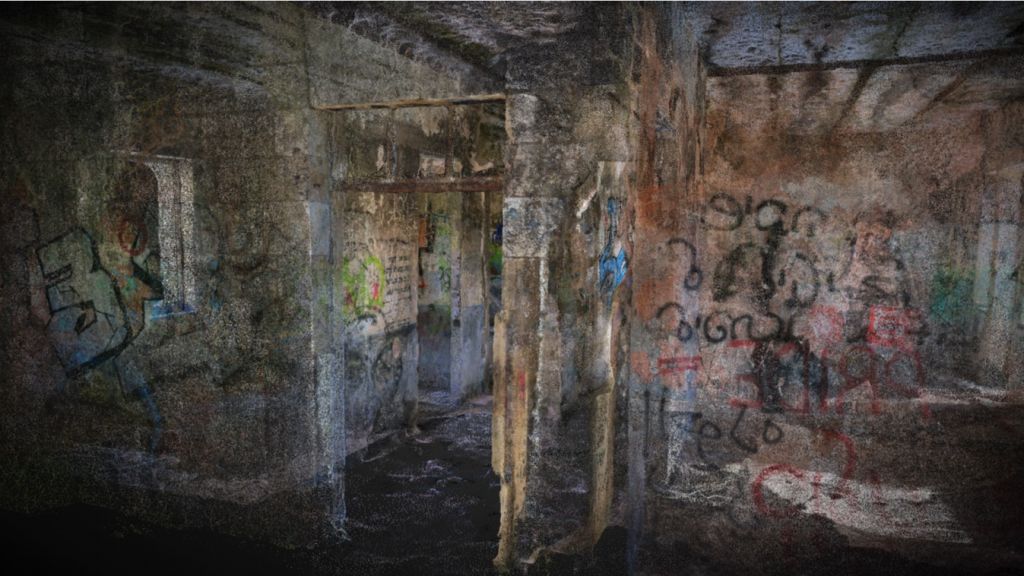
Hansen House, Jerusalem
A point tour of the Hansen House Center for Design, Media and Technology, Jerusalem.
Designed by German architect Conrad Schick, Hansen House was first established in 1887 as a leper asylum by the Protestant community of Jerusalem. In 1950 the site was purchased by the Jewish National Fund (JNF), and served as a leprosy treatment center through 2000. In 2009, the Israeli government decided to hand over the building to the municipality of Jerusalem, for the purpose of converting it into an interdisciplinary cultural center.
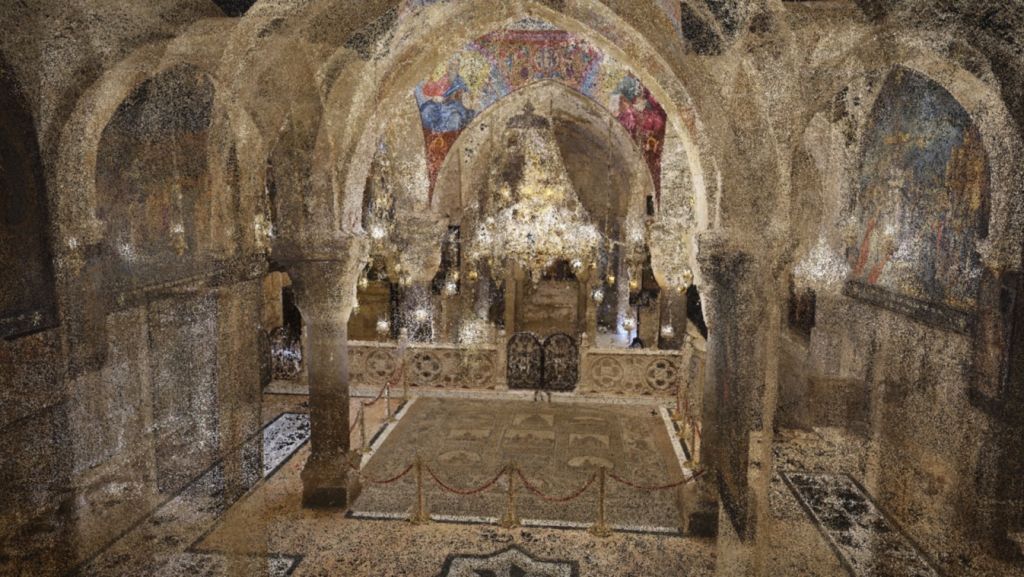
Chapel of Saint Helena, Jerusalem
The Chapel of Saint Helena is a 12th-century Armenian church in the lower level of the Church of the Holy Sepulchre in Jerusalem, constructed during the Kingdom of Jerusalem. In the southeast of the chapel there is a chair which was reputed to be a seat that was sat in by Helena, the mother of the Emperor Constantine, when she was looking for the True Cross.
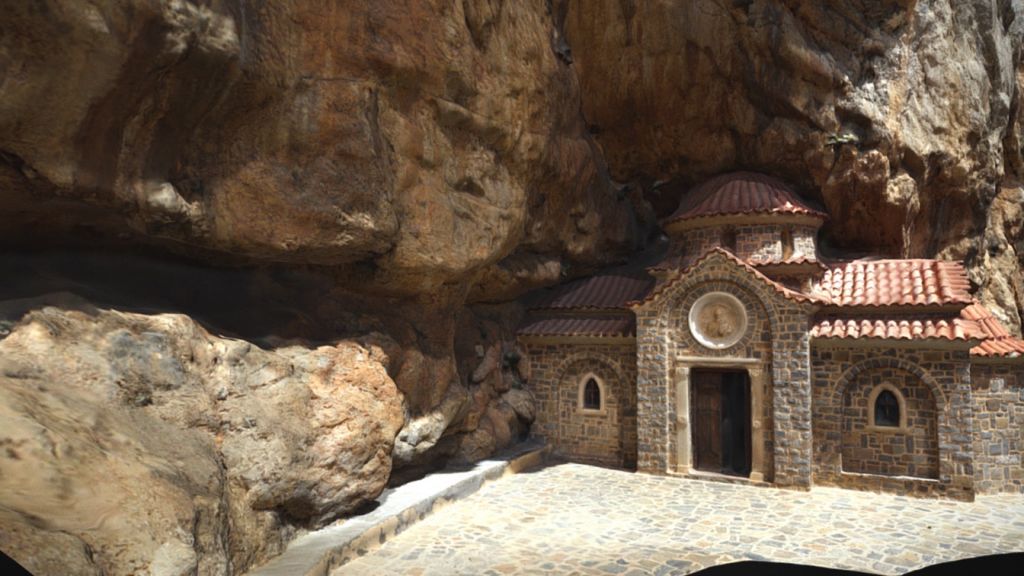
Church of Saint Nicholas the Wonderworker, Crete
Orthodox Church of Saint Nicholas the Wonderworker, Crete.