Project Description
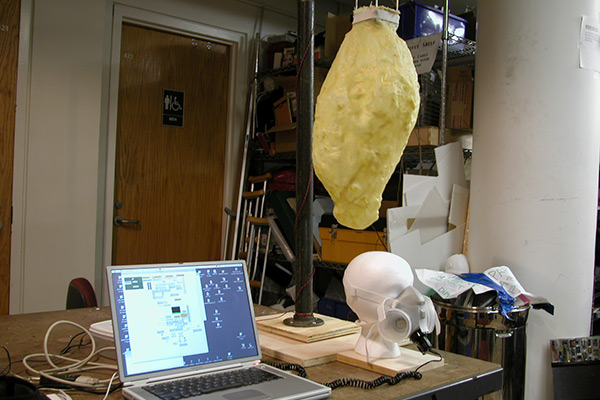
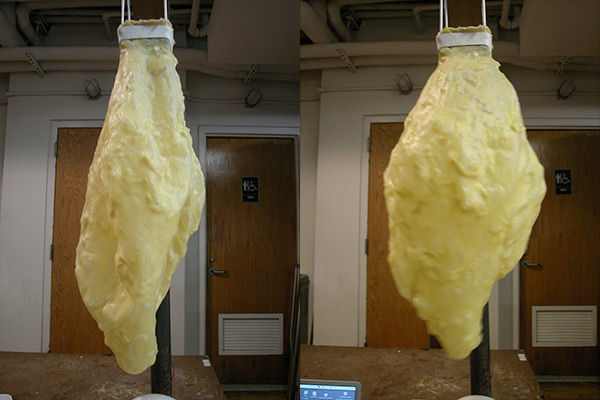
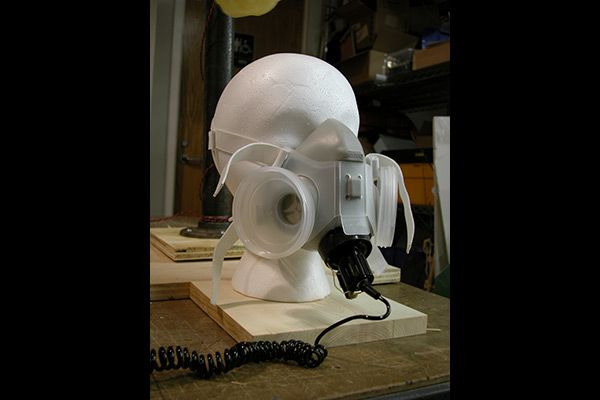
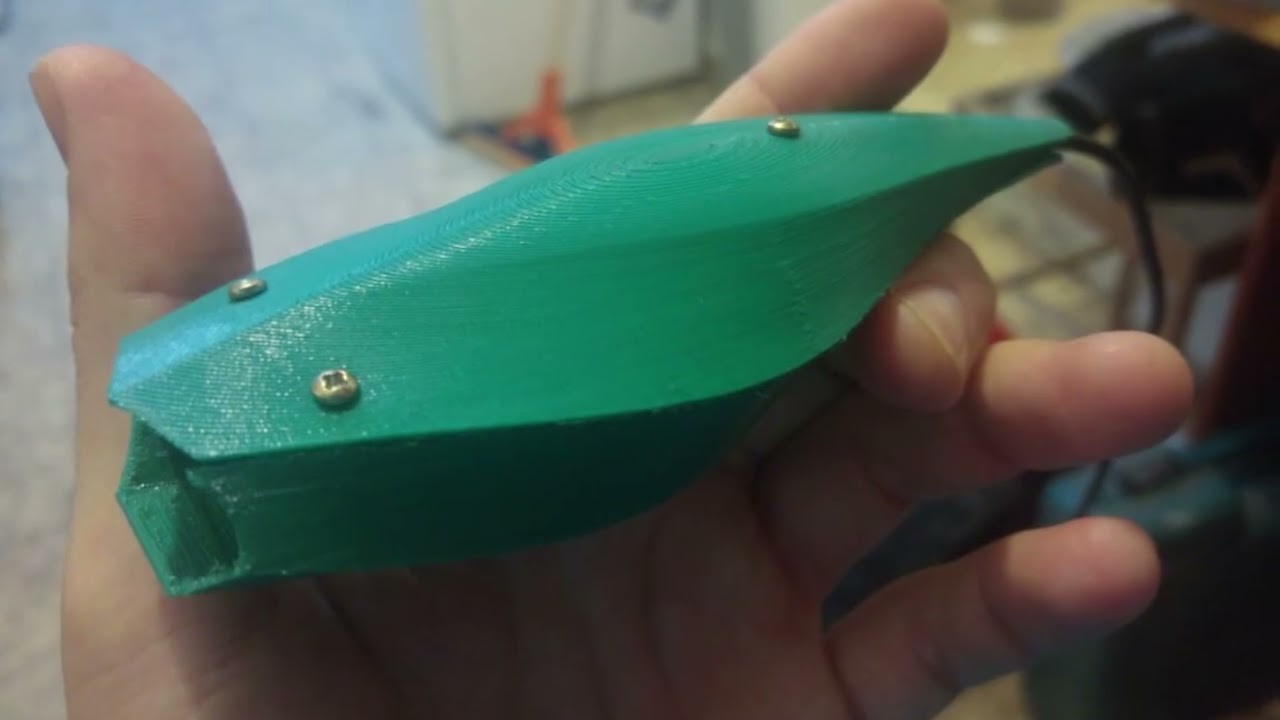
Experimental kinetic sculpture. a combination of “organic sculpture” and physical computing. a self contained latex lung that could be controlled by the user breathing noise.The lung is constantly breathing by it’s own reflexes, once the user is putting the face mask on his face and breath into it, his breathing noise takes over the lung and the lung is reacting and synchronizing to the user breathing sound.
Latex, plastic, wood, metal, BX24 microchip, microphone, CPU, software, DC fan.
Lung began at the Interactive Telecommunications Program (ITP) at NYU’s Tisch School of the Arts, where I completed my master’s degree in 2004. ITP was, and remains, a laboratory for physical computing: building objects that sense the human body and respond to it. Lung grew out of that culture, and out of a question that still runs through my work: what happens when a machine behaves like a body, and a body is asked to keep pace with a machine?
The sculpture is a handmade latex organ suspended in space. Left alone, it breathes by itself, inflating and deflating in a slow rhythm driven by a small DC fan. When a visitor puts on the face mask and breathes into it, a microphone picks up the sound of their breath. Software on a computer reads its rhythm and intensity and passes it to a BX-24 microcontroller, which takes control of the fan. The lung gives up its own reflex and begins to breathe with the visitor, slowing when they slow and quickening when they rush.
The BX-24 was the microcontroller taught in ITP’s physical computing courses at the time, just before Arduino made this kind of work widely accessible. Working with it meant writing low-level code, wiring sensors by hand and tuning a mechanical system through trial and error. Many of the questions I later pursued in computational photography and interactive installation, about agency, embodiment and the exchange between human and machine, first took shape in this piece.