Reflectance Transformation Imaging (RTI) is a computational photography technique that records how a surface responds to light from many directions. The result is an interactive image that can be relit afterwards, so faint incisions, tool marks and inscriptions can be read at the computer without touching the object.
1. A fixed setup
The object and the camera do not move during the whole sequence. Light is the only thing that changes.
2. Many light directions
Typically 40 to 70 photographs are taken, each lit from a different known direction, with a light dome or with the highlight method, using a reflective sphere beside the object.
3. Computation and viewing
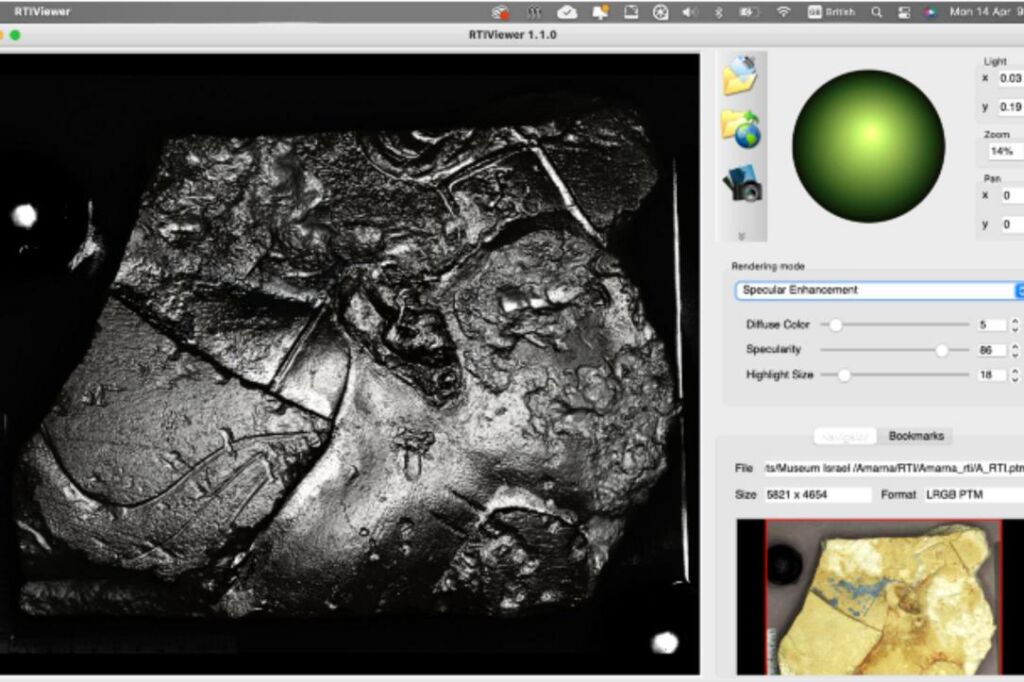
Software calculates a reflectance function for every pixel. The file first looks like a flat photograph, until the viewer moves a virtual torch across it or switches to specular enhancement and normals.
How RTI relates to my work
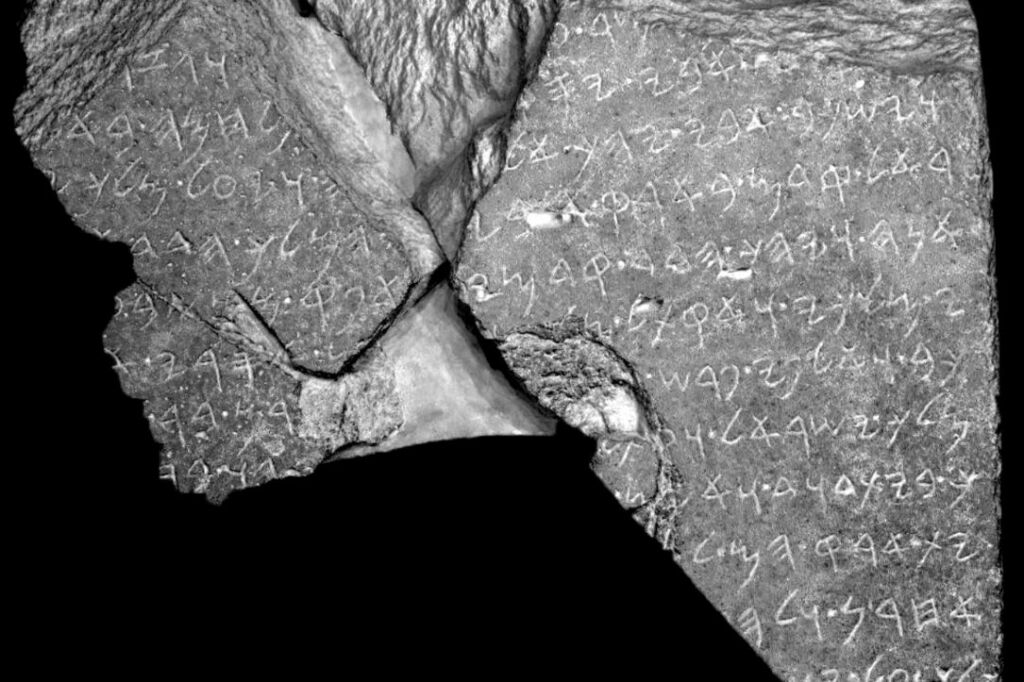
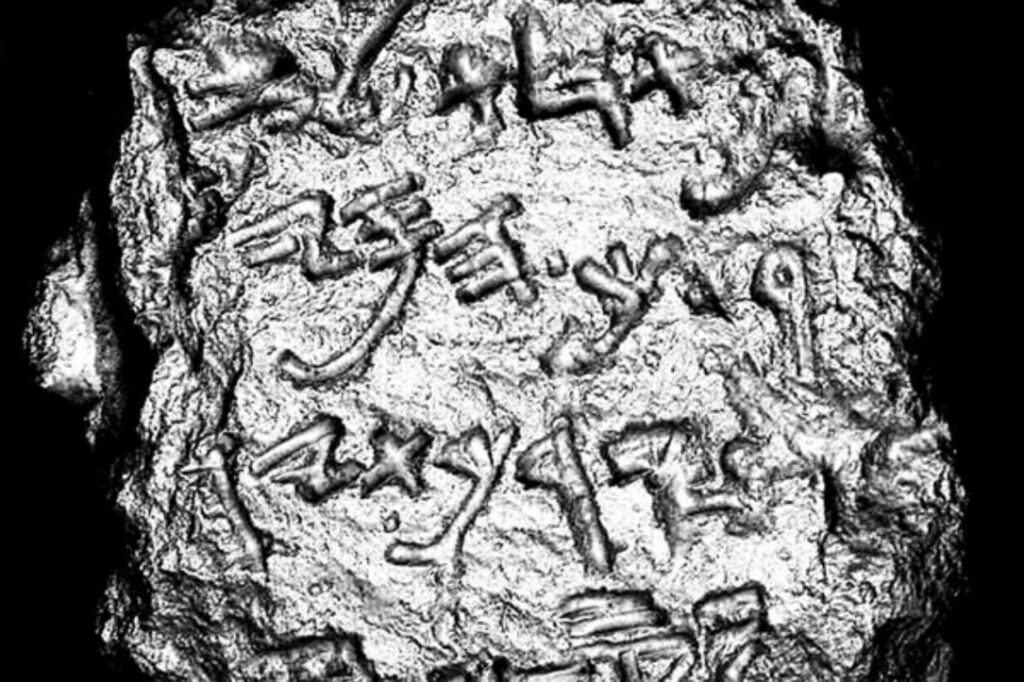
RTI began at Hewlett Packard Labs, where Tom Malzbender introduced it in 2001 as Polynomial Texture Mapping, and it is carried forward today by Cultural Heritage Imaging and an international community of users. Its strength is that the relighting happens after the fieldwork, on the computer, without touching the object. That makes it especially useful for inscriptions, engraved graffiti and worn surfaces, where a reading often depends on a raking light that nature rarely supplies on the day.
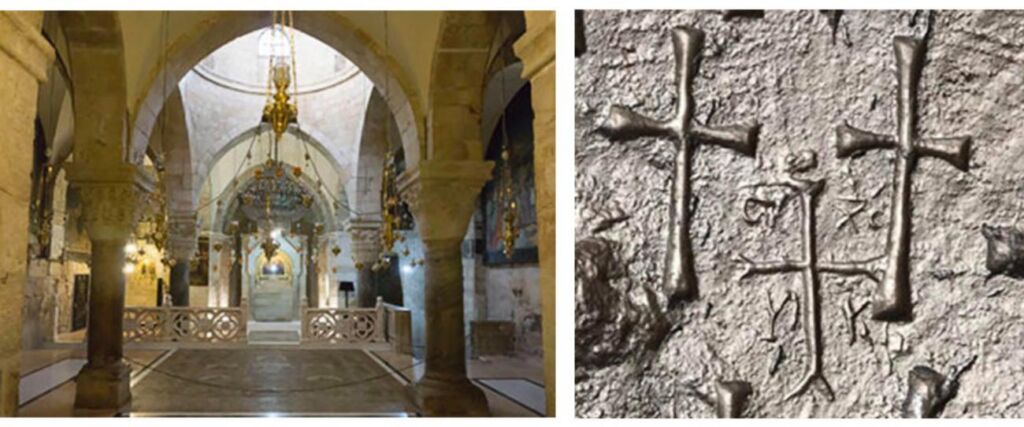
I work with RTI together with Moshe Caine at the Jerusalem Institute for Research and Digital Documentation of Cultural Heritage. In the Chapel of Saint Helena, in the Church of the Holy Sepulchre, we selected 25 stones for RTI, each producing files of about 200 megabytes, while the thousands of other crosses on the walls were recorded with photogrammetry. The two methods answered each other’s limits: RTI gave remarkable surface detail where the stone could be reached with a tripod and a light, and structure from motion worked where the walls were too close, too low or too high. Our conclusion was that no single technology dominates, and that the best reading of an inscription comes from combining them with traditional archaeological research.
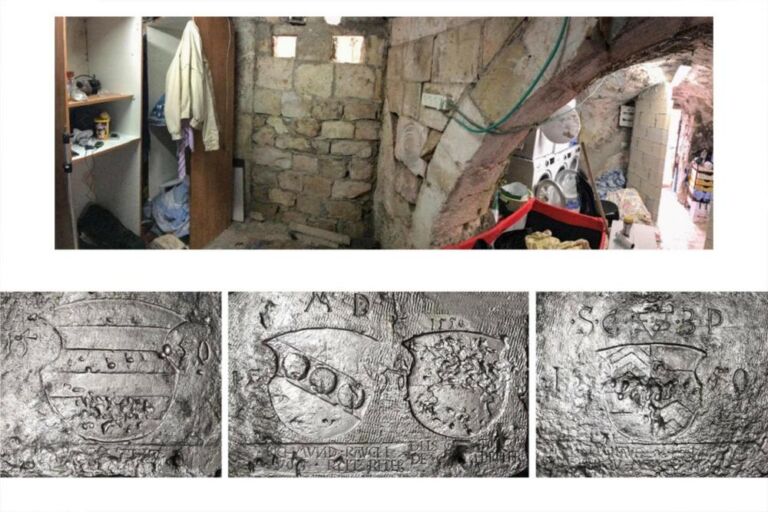
The same approach has been applied to the Tel Dan Stele at the Israel Museum, to an eighth century BCE Hebrew inscription from Jerusalem, to a stone fragment from Tel Amarna, to the heraldic shields of German knights on Mount Zion, and to the Cenacle.
Further reading
- Combining RTI and SFM: A multi-faceted approach to inscription analysis, Caine, Altaratz and Maggen, EVA Florence, 2019
- The riddle of the crosses: The Crusaders in the Holy Sepulchre, Caine, Altaratz, MacDonald and Re’em, EVA London, 2018
- Historical archaeology of medieval pilgrimage: Dating the “Walls of the Crosses”, Re’em, Caine, Altaratz and Tchekhanovets, 2022
- Historic graffiti as a visual medium for the sustainable development of the underground built heritage, Trentin, Altaratz, Caine, Re’em, Tinazzo and Gasanova, Sustainability, 2023
- Reflectance Transformation Imaging, Cultural Heritage Imaging